Returns and claims
Is an unboxing video mandatory for returns?
Many online sellers in India won't accept a damage or wrong-item claim without an unboxing video. Is that allowed, how to record one and what to do if they refuse.
What "unboxing video mandatory" means
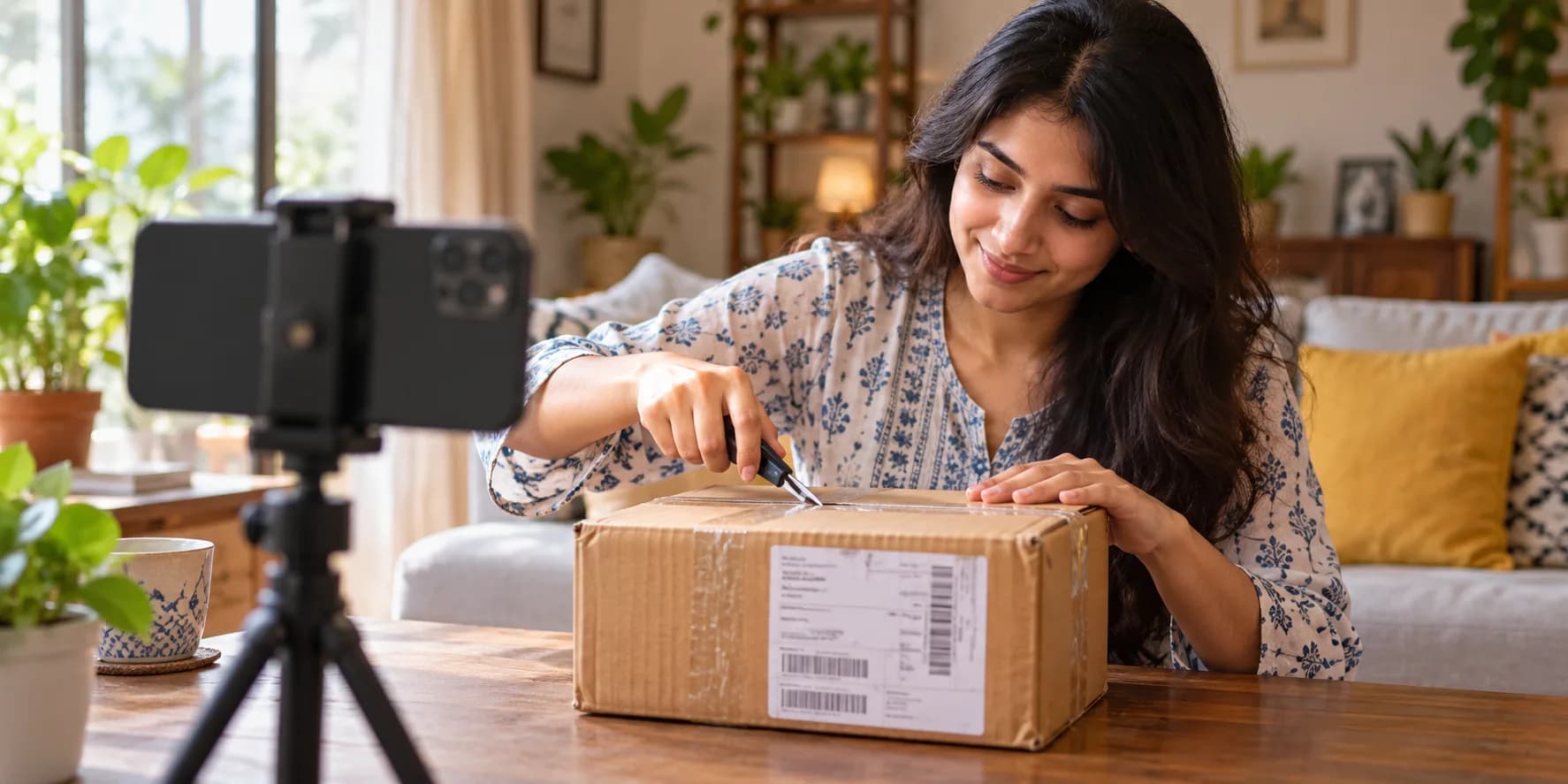
An unboxing video is a recording of you opening the parcel, from the sealed box to the product inside. Sellers who require one usually write something like "no unboxing video, no claim" in their return or refund policy. If the item arrives broken, wrong or short, they ask for that video before they'll replace it or give your money back.
Most shops apply it to damage and wrong-item claims, not to everything. A size exchange usually doesn't need one. Read the policy to see which claims it covers and how soon you have to report a problem.
Why honest sellers ask for one
When a parcel arrives broken, the seller usually has to show the courier what happened before they get anything back. A video made at the moment of opening is the clearest proof there is. It also protects small sellers from false claims, such as an empty box or a swapped item. A big brand can absorb a few of those. A small Instagram shop often can't.
The video works for you as well. It's your proof that the parcel was sealed and what was inside. With a video, a claim is hard to dispute. Without one, it's your word against theirs.
How common it is
Of the 41,055 sellers in India that VouchKart had checked by 3 Nov 2026, 13,057 have a live website we could read. 2,216 of those (17%) say in their policy that they need an unboxing video for claims.
- Shops in India2,216 of 13,057 shopsShops in India: 17% (2,216 of 13,057 shops)17%
- Shops elsewhere204 of 8,940 shopsShops elsewhere: 2% (204 of 8,940 shops)2%
Share of shops with a live website, as of 3 Nov 2026. A shop counts only when its own policy says so.
It's mostly an Indian rule. Outside India only 2% of shops ask for one. Of the 2,420 shops we found with the rule anywhere, 92% are in India.
The real share in India is probably a little higher. Some shops have a policy page we couldn't read, and we only count a shop when its own words say the video is needed.
Can a seller refuse your claim without a video?
They can ask for one, and they can take longer to check a claim that has no video. But their policy doesn't override the law. Under the Consumer Protection (E-Commerce) Rules, 2020, an online seller can't refuse to take back goods or refund you if the item is defective, fake, not as described or delivered late. That covers shops selling through their own website.
So if you forgot to record, still report the problem quickly with photos, the chat and your order details. And if a seller refuses a clear claim only because there's no video, you can take it further. The steps are below.
Normal, worth a closer look or a red flag
Normal
The rule is written in their return or refund policy before you order. It covers damaged, wrong or missing items. They tell you how long you have to report a problem.
Worth a closer look
The rule only shows up after you complain. The time to report is a few hours, or isn't stated at all. They want a video even to swap a size. There's no written policy, just a line in their bio.
Red flag
They turn down a clear, unedited video without saying why. They stop replying once you send it. They ask you to pay a "return fee" or "re-delivery charge" before they'll look at your claim.
How to record an unboxing video for a return
- Start recording before you touch the tape. Show the sealed parcel from every side, including any dents, tears or tape that looks resealed.
- Show the shipping label. Your name and the order or tracking number should be readable.
- Record in one take. Don't pause, cut or edit. A video with a gap in it is easy to reject.
- Keep the phone steady. Prop it up or use a stand so both hands are free and the parcel stays in frame.
- Show what's inside clearly. Hold up each item, the tags and any damage in good light. If it's a gadget, switch it on while still recording.
- Keep the video, the item and the packaging until the claim is settled. If you send the video on WhatsApp, send it as a document so it isn't compressed.
- Report quickly. Many shops only accept claims within a day or two of delivery. Check their policy for the exact time.
If the courier offers open-box delivery, use it. And if the outer box looks damaged or opened when it arrives, take a photo before you accept it.
If the seller refuses your claim
Work through these in order. Keep every complaint number you get.
- Write to the seller. Send your video or photos, the order details and what you want: a replacement or a refund. Ask them to explain in writing if they refuse. If their website lists a grievance officer, write to them too. Online shops are required to acknowledge a complaint within 48 hours and resolve it within a month.
- Go through how you paid. If you paid by card, ask your bank to dispute the payment for goods not as described. Do it early, since card disputes have deadlines. If you paid by UPI, raise a dispute on the transaction in your UPI app, then with your bank.
- Complain to the National Consumer Helpline. Call 1915, message 8800001915 on WhatsApp or file at consumerhelpline.gov.in. It's free and you can do it with or without a video.
- File with the consumer commission. If it's still unresolved, you can file online at e-jagriti.gov.in. You don't need a lawyer.
If the seller blocks you or the shop turns out to be fake, skip straight to the National Cyber Crime Helpline: call 1930 or report at cybercrime.gov.in. The sooner you report, the better the chance of stopping the money. Our guide on what to do after a UPI scam has the full steps.
Once it's settled, good or bad, find the seller on VouchKart and leave a review. It puts what happened on record and helps the next buyer decide.
These figures come from VouchKart's snapshot of 41,055 checked sellers in India as of 3 Nov 2026. They count shops whose website we could read and whose policy says an unboxing video is needed for claims. This guide is general information, not legal advice. How we check sellers.